
Nowhere Else to Go: Patients, Pressure, and the Breaking Point for Community Health Centers
“I just need someone to see me… before it gets worse.”
That sentence isn’t dramatic, it’s ordinary. For many patients who rely on community health centers (CHCs), it’s the quiet thought behind every phone call, every refill request, every attempt to book an appointment before symptoms spiral.
You shouldn’t have to choose between waiting weeks for care and going without it. But that’s the tension many patients live with every day.
You call for help and the next available appointment is far out. You’re told to try telehealth but your data plan is limited, your connection drops, or there’s no private place to talk.
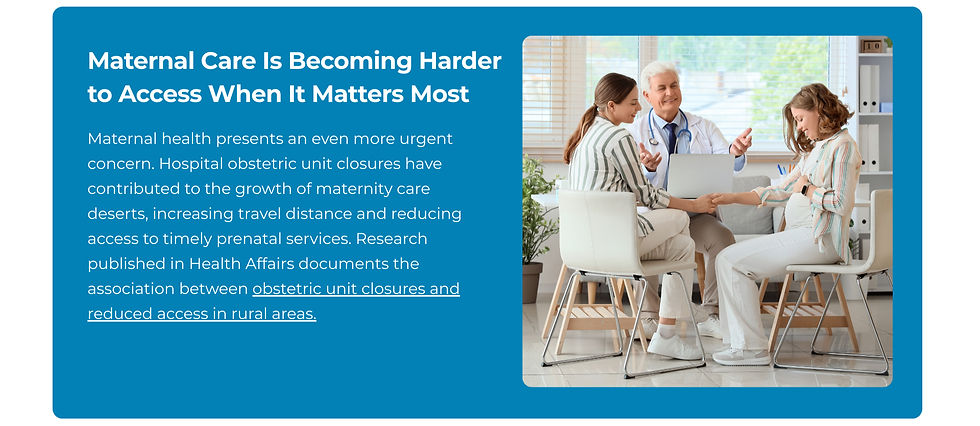
You’re managing diabetes, asthma, or depression, and every missed visit feels like a step backward. If you’re pregnant, the stress deepens. A hospital maternity ward closes. Follow-up care shifts. Travel time doubles. And the question becomes: Who stays with me through this?
When Medicaid coverage changes overnight due to re-enrollment issues, you’re left wondering whether you can afford labs, medication refills, or postpartum visits, even when your health can’t wait.
For patients, the strain isn’t abstract policy. It’s lived uncertainty. And for the clinics serving them? They’re being asked to do more and with fewer resources.
The Clinics Patients Trust Most Are Under the Most Pressure
Community health centers are essential infrastructure. They serve more than 30 million patients annually in the United States, many of whom are uninsured or publicly insured, and disproportionately affected by chronic illness and social risk factors. Data from the Health Resources and Services Administration consistently shows the scale and essential role of these centers, and published analyses confirm their impact on access and quality of care.
They are often the only consistent source of care in rural communities, underserved population in urban areas, and maternity care deserts. But pressure is building and patients can feel it.



The Hidden Truth: Patients Don’t Just Need Access, They Need Continuity
Access answers the question: Can I be seen?
Continuity answers the question: Will someone stay with me?
For patients managing chronic illness, mental health conditions, pregnancy, or complex medication regimens, meaningful outcomes rely on consistent check ins, reliable follow up, medication stability, and sustained education and coaching. That continuity fosters trust over time, and trust is what ultimately supports better long term outcomes.
Community health centers excel at this kind of whole-person care, which raises an important question:
If CHCs are already stretched protecting continuity, how can research, especially long-term extension studies, fit without creating additional strain?
Why Extension Studies Matter, Especially in Community Health Settings
Extension studies, including long-term follow-up phases or continued-access protocols, generate deeper insight into:
Durability of response
Long-term safety
Real-world adherence
Quality-of-life outcomes
When conducted in CHCs, they also offer something critical for public health: representation.
They help ensure evidence reflects real-world populations, not just large academic centers. For patients, well-designed extension studies can mean:
Ongoing monitoring
Structured follow-up
Continued access pathways (when applicable)
Care teams who understand their lived context
But without thoughtful integration, extension studies can introduce friction. In CHC communities, that friction looks like:
Patients changing phone numbers or addresses
Transportation instability
Insurance coverage disruptions
Work schedule variability
Limited clinic bandwidth for research documentation
The risk? Study burden competes with care delivery. And in safety-net settings, care must come first.
So, the real question becomes: How do we support extension studies without adding weight to the clinics holding the safety net?
That’s where thoughtful embedding matters.
How Rubix LS Integrates Extension Studies into Community Health Centers
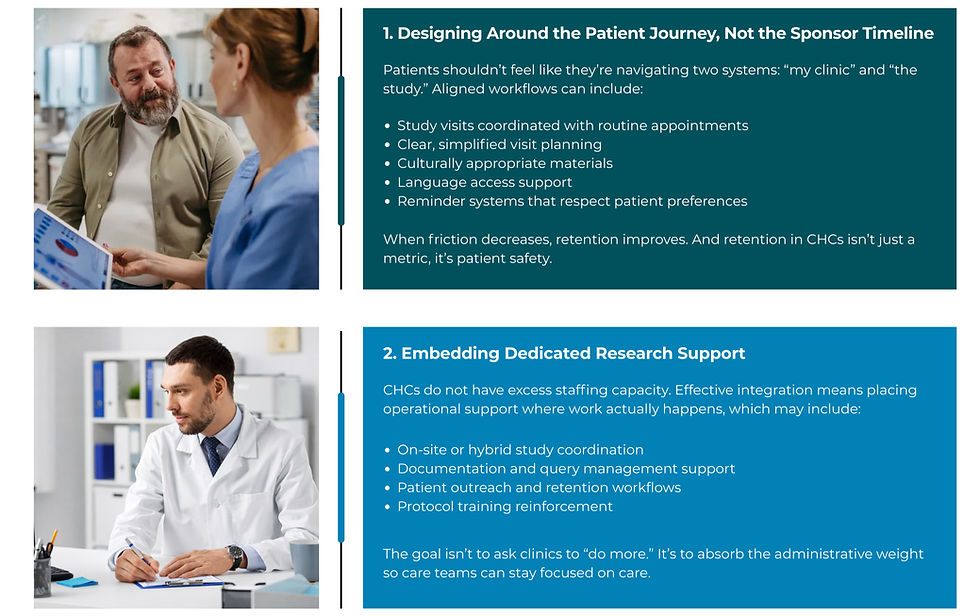
Extension studies in CHCs only work when they protect three things:
Patient trust
Clinic capacity
Continuity of care
Integration must feel invisible to patients and sustainable for clinics.

The Bottom Line: CHCs Are Carrying the Safety Net, Let’s Not Add More Weight
If we want inclusive, real-world evidence, we must meet patients where they already are. When integration is done well, patients don’t feel “studied.”
They feel supported.
Follow-ups feel coordinated.
Communication feels clear.
Care feels continuous, not fragmented.
And clinics remain focused on what they do best: delivering essential care. Community health centers are resilient, but they are under pressure. Extension studies can strengthen long-term evidence and patient monitoring, but only when designed around real-world constraints. The standard shouldn’t be just data completeness. It should be whether participation felt humane.
Ready to operationalize extension studies in community health centers without increasing staff strain or risking patient continuity?
Rubix LS embeds operational support, strengthen retention, and deliver extension study execution that respects real-world realities. Consult with our research experts today to explore how this model can work in your community based setting.


