
“I Almost Quit the Trial”: Why Clinical Research Is Losing Patients Before Science Ever Fails
In the United States, more than 80% of clinical trials fail to meet enrollment timelines, and up to 30% of enrolled patients drop out before completion.
Now imagine this from the patient's perspectives.
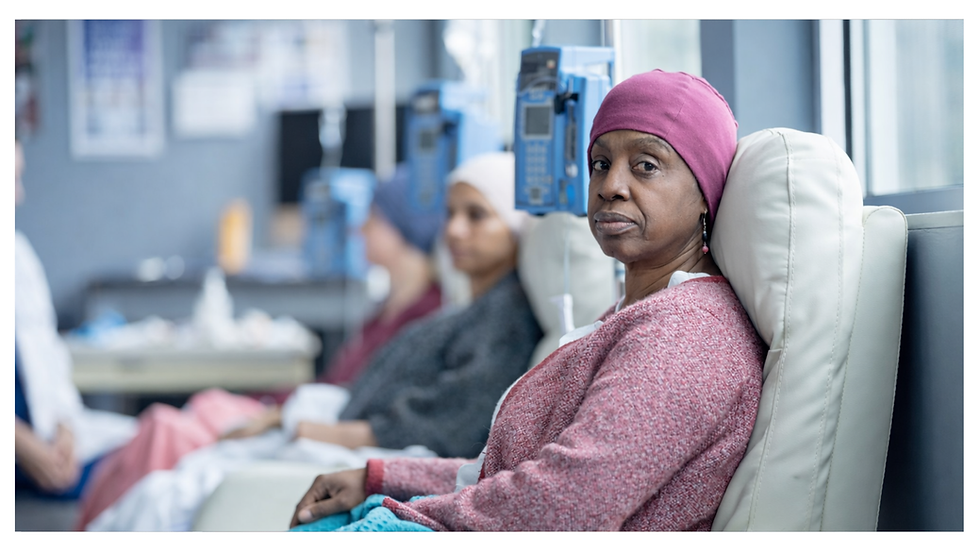
This is Maria and she's 52. She has metastatic breast cancer. Her oncologist tells her a clinical trial could give her access to a promising therapy not yet approved. She says yes - hopeful, scared, motivated.
Three weeks later, she’s overwhelmed:
Filled out the same medical history four times
Three different coordinators
Protocol changes you weren’t warned about
Driven hours for multiple hospital visits that exhausts you more than the disease
No clear explanation of why this test or that visit matters
Doesn’t know who to call when side effects spike at 2 a.m.
Maria doesn’t quit because she doesn’t care. She quits because the trial was designed around systems, not around her life.
This isn’t rare. While the CRO market celebrates growth, specialization, and AI-driven feasibility, the patient experiences something else entirely, often due to logistical burden, lack of clarity, and emotional fatigue.
Every dropout delays timelines, inflates costs, and, most importantly, slows access to future patients who are waiting. This gap between what the system optimizes for and what patients can actually sustain is exactly where the CRO market reset begins, just not in the way most industry recaps describe it.
What the CRO “Reset” Looks Like from the Waiting Room
From the industry’s perspective, 2025 is already being framed as a turning point. Specialists clearly outperformed generalists. Oncology, neuroscience, and cell therapy absorbed the bulk of investment and trial activity. AI-enabled feasibility, adaptive designs, and hybrid models moved from experimental to expected. Sponsors became more selective, walking away from one-size-fits-all CROs in favor of partners with sharper focus, deeper data capabilities, and more predictable execution.
All of that is true and all of it makes sense on paper. But from the patient’s chair, here’s what that same reset feels like:

None of this feels innovative when you’re the one living it. It feels unstable. From the patient’s seat, clinical trials aren’t “innovative ecosystems.” They’re daily trade-offs that patients quietly absorb and rarely complain about until they leave:
Do I miss work again — or skip this visit?
Do I report this side effect — or risk being removed?
Do I ask another question — or accept confusion?
Do I continue — or protect what little energy I have left?
None of this shows up clearly in feasibility spreadsheets. From a patient’s POV, the question isn’t - “Is this protocol scientifically elegant?”, it is, “Can I realistically survive this process on top of my disease?”.
What Could Be Done Differently (If We Designed Backward from the Patient)
Clinical research has long been optimized around statistical power and protocol fidelity, rather than the lived experience of the people who are asked to participate. That design imbalance is one of the reasons dropout and retention remain perennial problems.
This isn’t about making trials “softer.” It’s about making them work in the real world, not just on a whiteboard.


None of this requires futuristic AI or massive budgets. It requires a mindset shift from, “How do we execute this protocol efficiently?” to “How does this protocol land in someone’s real life?”
That shift doesn’t just improve the patient experience, it protects the science itself. Every dropout is not only a human story; it’s also a data risk, a timeline threat, and a cost driver. Designing backward from patient reality isn’t nice. It’s necessary.
The CROs That Will Matter Most in 2026
Patients don’t decide to quit trials in dramatic moments. They decide quietly, after one too many exhausting days, unanswered questions, or schedule changes that make them feel invisible.
The CRO market reset we’re seeing isn’t just about specialization, analytics, or capital flow. It’s about something more fundamental: Patients are becoming the ultimate feasibility constraint.
The CROs that will matter most in 2026 won’t just pick a lane, own a therapeutic area, and/or speak the language of regulators and sponsors, they’ll understand one thing deeply - A trial only succeeds if a patient can realistically live inside it.
At Rubix LS, this belief drives how conversations begin, not with services, but with questions about how a trial will be experienced by the people inside it. Not every study needs a full reinvention. But every study benefits from an honest rethink.
If this perspective resonates or challenges how you’ve been approaching trial design, it’s usually a sign that a conversation with our team could be valuable. Talk to our team today to explore what this could look like in practice.


